How to read a tea label
Walk down the tea aisle and every box is premium. Every box is hand picked. Every box is garden fresh, whatever that means for a leaf that was dried eleven months ago.
None of those words is regulated and none of them tells you anything. Here is what to look for instead.
1. The grade, not the adjective
Tea is graded, and the grade is genuinely informative. CTC means crush, tear, curl: the leaf is machine rolled into hard grains that brew fast and strong. It is the right choice for chai and the wrong choice for a delicate cup. Orthodox means the leaf was rolled whole, so it brews slower and tastes more complex.
Then come the letter codes. FTGFOP and its relatives look absurd but they describe leaf size and how much young tip is in the pack. You do not need to memorise them. You only need to notice whether the pack tells you at all. A brand that hides the grade is usually hiding the grade for a reason.
2. Where it was grown, and how specifically
“Assam” is a state the size of Ireland. “Darjeeling” is a protected name and worth something, but it still covers eighty seven estates and a great range of quality. The more precisely a pack names its origin, the more likely somebody actually knows where it came from.
Vagueness is the tell. “Sourced from the finest gardens of India” means nobody wants to say which.
3. The harvest date, not the expiry date
Every pack has a best before date, which for tea is close to meaningless, because tea does not become unsafe. It becomes dull. What you want is the harvest date or at least the flush: first flush, second flush, autumn.
For Darjeeling this matters enormously. First flush is bright and green and grassy. Second flush is where the muscatel note lives. A pack that says only “Darjeeling tea” is telling you it does not want to commit.
4. The ingredients list, in full
A pure tea has one ingredient. If the list says “natural flavouring”, the leaf has been sprayed. That is not automatically a scandal, but you should know that you are buying a flavoured product rather than a tea that tastes of itself.
In herbal blends, look at the order. Ingredients are listed by weight, so “chamomile, lemongrass” is a chamomile tea and “lemongrass, chamomile” is a lemongrass tea with some chamomile in it.
What we put on ours
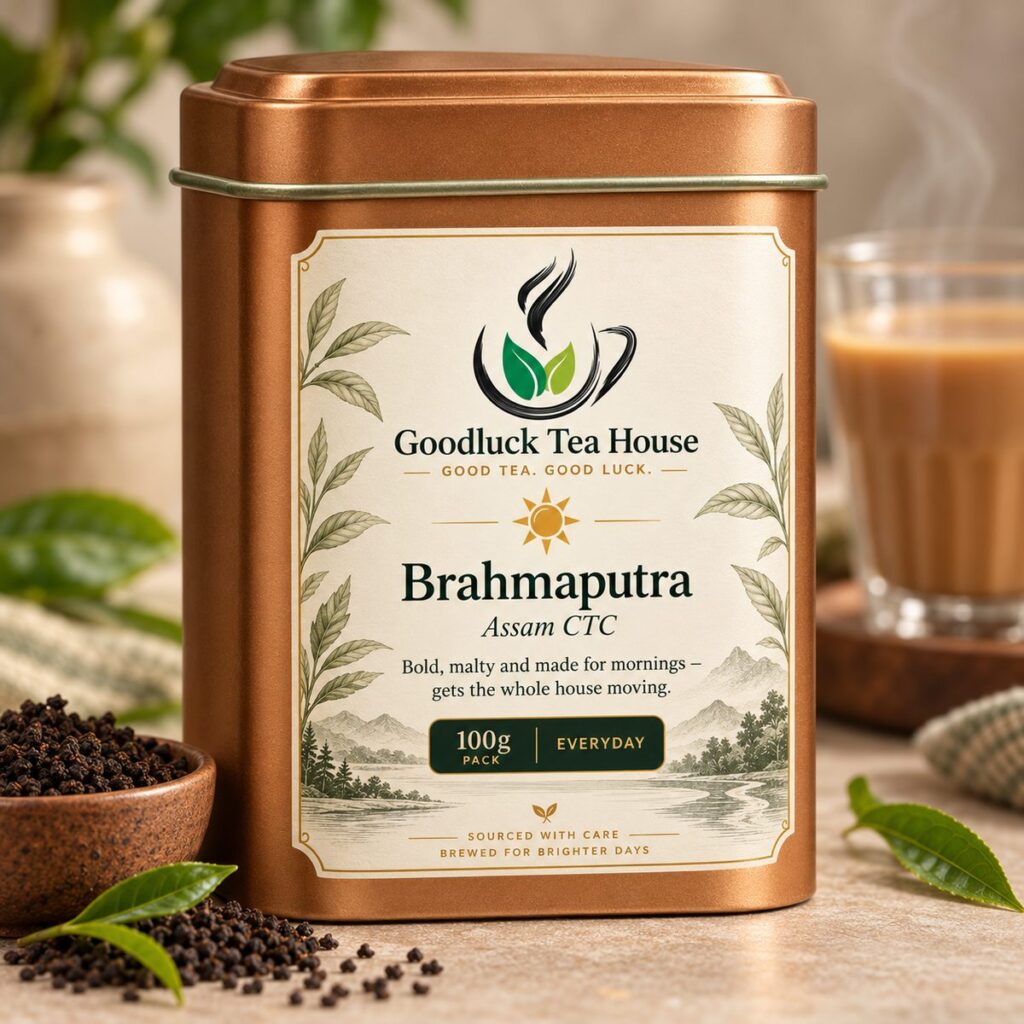
Grade, origin, pack weight, brewing instructions and a complete ingredient list. Where a tea has one ingredient, the list says one thing. We would rather tell you the leaf is a plain everyday CTC and let you decide, than call it premium and hope you do not look.
Leave a Reply